
How to Build a Commercial Floor Maintenance Schedule
Commercial floors experience constant foot traffic, dirt, spills, moisture, and everyday wear. Without a consistent maintenance plan, floors can quickly lose their appearance and become more difficult and expensive to maintain. A well-planned commercial floor maintenance schedule helps businesses keep their facilities clean, safe, and professional while protecting their flooring investment.
Whether you manage an office, retail store, healthcare facility, school, or other commercial property, the right maintenance schedule should be based on floor type, traffic levels, building use, and specific cleaning requirements.
Start by Identifying Your Floor Types
Different flooring materials require different maintenance methods. Before creating a schedule, identify whether your facility has carpet, vinyl composition tile (VCT), luxury vinyl tile (LVT), ceramic tile, concrete, or other flooring.
Understanding the flooring material helps determine which cleaning products, equipment, and procedures should be used.
Establish Daily Floor Cleaning Tasks
Daily maintenance should focus on removing dirt and debris before they cause buildup or damage. Common daily tasks include sweeping, dust mopping, vacuuming carpeted areas, removing visible spills, and cleaning high-traffic areas.
Entrances, reception areas, hallways, elevators, and break rooms may require more frequent attention because they receive heavier traffic.
Create a Weekly Maintenance Routine
Weekly floor care can address areas that do not require daily deep cleaning. Depending on the facility, tasks may include detailed mopping, spot treatment, cleaning corners and edges, and inspecting floors for stains, scuffs, or damage.
A weekly inspection can also help identify maintenance issues before they become expensive problems.
Schedule Monthly and Periodic Floor Care
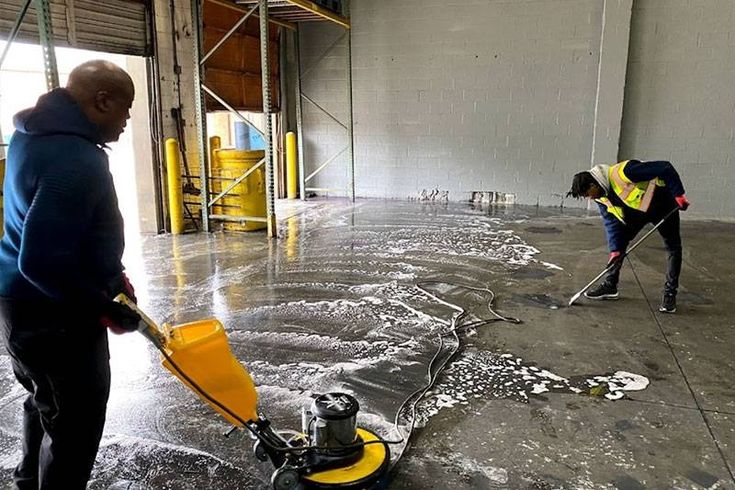
Some commercial floors require specialized maintenance at regular intervals. Depending on the flooring type, periodic services may include machine scrubbing, burnishing, carpet extraction, or other professional floor-care procedures.
The frequency should be adjusted based on traffic, soil levels, flooring condition, and manufacturer recommendations.
Consider High-Traffic Areas
Not every area of a commercial building needs the same cleaning frequency. High-traffic locations should receive more attention than low-use spaces.
For example, entrances and main corridors may require daily or multiple-times-per-day cleaning, while private offices or storage areas may require less frequent service.
Include Regular Floor Inspections
Inspections are an important part of an effective commercial floor maintenance plan. Facility managers should regularly check for stains, scratches, damaged flooring, moisture issues, loose materials, and areas showing excessive wear.
Early identification allows businesses to address problems before they become larger maintenance concerns.
Train Cleaning Staff
A maintenance schedule works best when cleaning teams understand the correct procedures for each flooring material. Staff should know which products and equipment are appropriate and how frequently each task should be performed.
Proper training helps reduce cleaning errors and supports consistent results.
Work With Professional Commercial Cleaning Services
Professional commercial floor cleaning services can help businesses develop and maintain a customized floor-care program. Experienced cleaning professionals can evaluate traffic patterns, flooring types, and facility needs to determine appropriate cleaning frequencies.
For businesses in Houston, TX and surrounding areas, professional commercial cleaning support can make it easier to maintain clean, attractive, and well-maintained floors throughout the year.
Frequently Asked Questions
How often should commercial floors be cleaned?
Daily cleaning is usually appropriate for high-traffic areas, while deeper floor-care services can be scheduled weekly, monthly, or periodically depending on the flooring type and facility conditions.
What should a commercial floor maintenance schedule include?
A schedule may include daily sweeping, vacuuming, mopping, spill removal, weekly detailed cleaning, periodic floor care, inspections, and professional cleaning services.
Why is a commercial floor maintenance schedule important?
A consistent schedule helps control dirt and buildup, maintain floor appearance, identify problems early, and protect the business’s flooring investment.
Conclusion
A successful commercial floor maintenance schedule combines daily cleaning, routine inspections, periodic floor care, employee training, and professional cleaning when needed. By creating a plan based on flooring type and traffic levels, businesses can maintain cleaner, safer, and more professional-looking facilities.
For Houston businesses, partnering with a reliable commercial cleaning provider can provide the expertise and consistent service needed to keep commercial floors in excellent condition.