
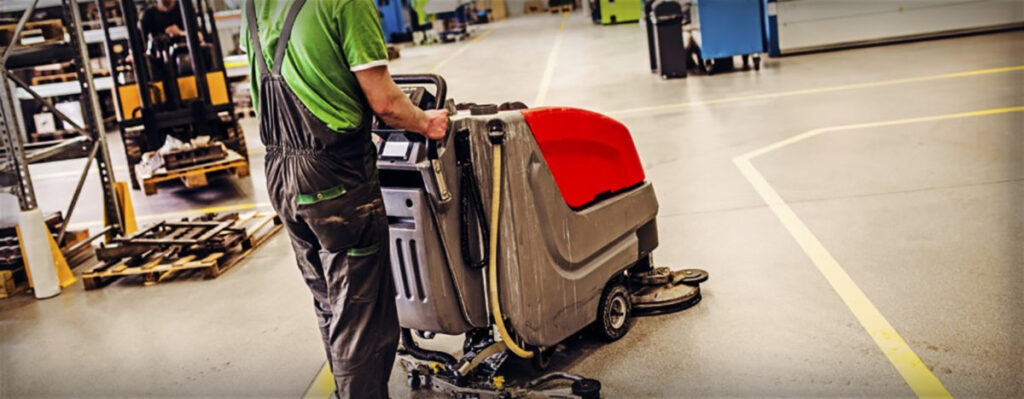
How to Maintain Floors in Commercial Warehouses
Warehouse floors experience constant activity from employees, forklifts, pallet jacks, delivery vehicles, carts, and foot traffic. Dirt, dust, spills, and debris can accumulate quickly and affect the appearance and condition of commercial flooring.
A consistent commercial warehouse floor maintenance program helps businesses manage everyday buildup and keep floors clean and well-maintained. The right approach depends on flooring type, traffic, warehouse operations, and facility requirements.
1. Create a Regular Cleaning Schedule
Regular cleaning is the foundation of warehouse floor maintenance. A cleaning schedule should be based on traffic levels, facility size, operating hours, and the type of activities performed inside the warehouse.
Routine tasks may include:
- Sweeping
- Dust removal
- Machine floor cleaning
- Spot cleaning
- Damp mopping where appropriate
- Debris removal
High-traffic areas may require more frequent cleaning than low-use areas.
2. Remove Dust and Debris Regularly
Warehouses can accumulate dust, packaging materials, dirt, and other debris throughout the workday.
Regular sweeping or appropriate mechanical cleaning can help prevent buildup. Pay particular attention to:
- Loading areas
- Main aisles
- Employee walkways
- Entry points
- Shipping and receiving areas
- Areas around workstations
Keeping these areas clean can also improve the overall appearance of the facility.
3. Address Spills Promptly
Oil, water, cleaning solutions, and other materials can sometimes spill on warehouse floors.
Spills should be addressed promptly according to the facility’s established procedures. Appropriate cleaning materials should be selected based on the substance and flooring material.
Prompt attention can help reduce staining and prevent slippery conditions.
4. Use the Correct Cleaning Equipment
Warehouse floors may require different equipment depending on the floor type and facility size.
Cleaning equipment can include:
- Industrial brooms
- Commercial vacuums
- Auto scrubbers
- Floor scrubbers
- Mops
- Appropriate floor-cleaning machines
Equipment should be selected based on the flooring material and cleaning requirements.
5. Identify the Warehouse Flooring Type
Different flooring materials require different maintenance approaches.
Commercial warehouses may have:
- Concrete floors
- VCT
- Vinyl flooring
- Tile
- Other commercial flooring systems
Before selecting cleaning chemicals or equipment, identify the flooring material and follow applicable manufacturer recommendations.
6. Maintain High-Traffic Areas
Not every part of a warehouse receives the same amount of traffic. High-traffic areas generally require additional attention.
These may include:
- Main aisles
- Loading docks
- Shipping areas
- Receiving areas
- Employee entrances
- Break-room entrances
- Forklift travel paths
A customized cleaning schedule can prioritize these areas.
7. Maintain Warehouse Office Floors
Many warehouses contain administrative offices, reception areas, conference rooms, and employee spaces.
These areas may require different cleaning methods than operational warehouse floors.
Routine office floor care may include:
- Vacuuming carpets
- Sweeping
- Mopping
- Spot cleaning
- Periodic commercial carpet cleaning
- VCT floor maintenance where applicable
8. Keep Entrances Clean
Outdoor dirt and moisture can enter warehouses through employee and delivery entrances.
Entrance maintenance may include:
- Sweeping
- Mat cleaning
- Spot cleaning
- Debris removal
- Regular floor inspections
Entrance mats can help reduce the amount of dirt and moisture entering the facility.
9. Schedule Periodic Professional Floor Care
Routine cleaning handles everyday dirt and debris, but some floors may benefit from periodic professional maintenance.
Depending on the flooring, professional services may include:
- Machine floor cleaning
- VCT floor care
- Floor buffing
- Floor stripping and waxing
- Commercial carpet cleaning
The appropriate service and frequency depend on flooring type and condition.
10. Protect Floors From Unnecessary Damage
Warehouse operations can contribute to floor wear. Facility managers should monitor traffic patterns and address conditions that may cause unnecessary damage.
Consider:
- Keeping aisles clear
- Addressing spills quickly
- Using appropriate equipment
- Maintaining entrance mats
- Following flooring manufacturer recommendations
- Reporting damaged flooring
Forklifts and pallet jacks should be operated according to workplace procedures.
11. Conduct Regular Floor Inspections
Routine inspections can help identify maintenance issues early.
Look for:
- Stains
- Cracks
- Excessive wear
- Damaged areas
- Surface buildup
- Spills
- Uneven areas
- Heavy soil
Maintenance concerns should be reported to the appropriate facility personnel.
12. Maintain a Cleaning Log
A cleaning log can help warehouse managers track completed floor maintenance.
Records may include:
- Cleaning dates
- Areas serviced
- Equipment used
- Special cleaning requirements
- Reported floor problems
- Recommended follow-up services
Documentation can help identify recurring maintenance needs and improve scheduling.
13. Coordinate Cleaning With Warehouse Operations
Cleaning should be planned around warehouse activity whenever possible.
Depending on the facility, floor cleaning may be scheduled:
- After operating hours
- During shift changes
- During weekends
- During scheduled maintenance periods
- In designated low-traffic windows
This can reduce disruption to warehouse operations.
Professional Warehouse Floor Care in Houston, TX
Maintaining commercial warehouse floors requires regular cleaning, prompt spill response, appropriate equipment, inspections, and periodic professional floor care.
Corporate Clean LLC provides professional commercial floor care and janitorial services in Houston, TX and surrounding areas.
Our services include:
- Commercial Cleaning
- Office Cleaning
- Industrial Cleaning
- Janitorial Services
- Floor Care & Maintenance
- Floor Stripping and Waxing
- Carpet Cleaning
- Healthcare Cleaning
- School Cleaning
We create customized cleaning plans based on warehouse size, flooring type, traffic levels, operating hours, and specific facility requirements.
Frequently Asked Questions
How often should commercial warehouse floors be cleaned?
Cleaning frequency depends on traffic, warehouse operations, flooring type, facility size, and soil levels. High-traffic areas generally require more frequent cleaning.
What is the best way to clean warehouse floors?
The appropriate method depends on the flooring material and facility requirements. Sweeping, vacuuming, mopping, machine cleaning, and other methods may be appropriate.
How should warehouse floor spills be handled?
Spills should be addressed promptly according to the facility’s established procedures, using appropriate materials and cleaning methods for the substance and flooring.
Do warehouses need professional floor care?
Periodic professional floor care can help maintain certain commercial flooring systems beyond routine cleaning. The need depends on floor type, condition, traffic, and maintenance requirements.
Can warehouse floor maintenance be customized?
Yes. A professional cleaning company can develop a schedule based on flooring type, traffic patterns, operating hours, facility size, and specific maintenance priorities.
Final Thoughts
Effective commercial warehouse floor maintenance combines routine cleaning, prompt spill response, regular inspections, appropriate equipment, and periodic professional services. A customized maintenance plan can help businesses manage high-traffic areas while coordinating cleaning with daily warehouse operations.
If you need reliable warehouse floor care services in Houston, TX, Corporate Clean LLC can develop a customized cleaning solution based on your facility’s flooring and maintenance needs.