
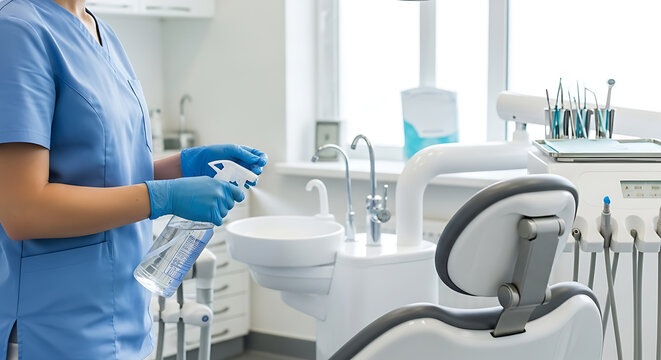
Why Is Professional Dental Office Cleaning Important?
A clean dental office is an important part of maintaining a professional and welcoming environment for patients, staff, and visitors. Dental practices have unique cleaning needs because patients, employees, treatment areas, waiting rooms, restrooms, and shared spaces are used throughout the day.
Professional dental office cleaning services can help maintain these areas through a structured cleaning program designed around the practice’s layout, traffic, operating hours, and established procedures.
For dental practices in Houston, TX, choosing a commercial cleaning company with experience in healthcare environments can help ensure cleaning tasks are organized and performed consistently.
What Is Dental Office Cleaning?
Dental office cleaning focuses on maintaining the general cleanliness of a dental practice’s environmental surfaces and common areas.
Depending on the facility and service agreement, cleaning may include:
- Waiting room cleaning
- Reception area cleaning
- Office cleaning
- Restroom cleaning
- Floor cleaning
- Carpet cleaning
- Common-area cleaning
- Break-room cleaning
- Trash removal
- High-touch surface cleaning
Cleaning of clinical equipment and treatment surfaces should follow the dental practice’s own infection-control procedures and manufacturer instructions.
1. Creates a Professional Patient Environment
The waiting room and reception area are often the first spaces patients see.
Clean floors, chairs, counters, doors, and restrooms can create a more organized and professional environment.
Patients may notice details such as:
- Clean floors
- Clean reception counters
- Well-maintained restrooms
- Clean entry doors
- Organized waiting areas
- Clean carpets
A professional appearance can help create a positive patient experience.
2. Supports a Cleaner Healthcare Environment
Dental offices are healthcare environments and require appropriate cleaning procedures.
Routine environmental cleaning can help remove:
- Dust
- Dirt
- Debris
- Spills
- Surface buildup
Cleaning should be performed according to the dental practice’s established procedures and applicable infection-prevention requirements.
3. Helps Maintain Waiting Rooms
Waiting rooms experience regular patient traffic and may require frequent attention.
Professional cleaning may include:
- Vacuuming
- Floor cleaning
- Dusting accessible surfaces
- Cleaning tables and counters
- Trash removal
- High-touch surface cleaning
The frequency can be adjusted based on patient volume.
4. Supports Restroom Cleanliness
Dental office restrooms should be cleaned regularly because they are shared spaces used by patients and staff.
Typical restroom cleaning may include:
- Toilets
- Sinks
- Countertops
- Mirrors
- Floors
- Waste containers
- Frequently touched surfaces
High-use practices may require more frequent restroom cleaning.
5. Helps Maintain Dental Office Floors
Dental office floors receive regular foot traffic from patients and staff.
Routine floor care may include:
- Sweeping
- Dust mopping
- Vacuuming
- Mopping
- Spot cleaning
Depending on the flooring type, periodic commercial floor maintenance, buffing, or floor stripping and waxing may be appropriate.
Cleaning methods should always be compatible with the flooring material.
6. Supports Carpet Maintenance
Carpeted waiting rooms, hallways, and offices can collect dust and debris.
Regular vacuuming helps manage everyday dirt, while periodic commercial carpet cleaning can provide more detailed carpet maintenance.
Cleaning frequency depends on:
- Patient traffic
- Carpet type
- Visible soil
- Building usage
- Facility requirements
7. High-Touch Surface Cleaning
Dental practices contain many frequently touched environmental surfaces.
These may include:
- Door handles
- Light switches
- Reception counters
- Handrails
- Faucet handles
- Waiting-room surfaces
Routine cleaning helps remove dirt and residue from these surfaces.
Where disinfection is required, appropriate products should be used according to their label directions and the dental practice’s established procedures.
8. Supports Staff Work Areas
Dental offices may include administrative offices, staff rooms, kitchens, and break areas.
Professional cleaning can help maintain these non-clinical spaces through:
- Dusting
- Vacuuming
- Floor cleaning
- Surface cleaning
- Trash removal
- Restroom maintenance
Keeping staff areas clean supports the overall appearance of the practice.
9. Provides a Consistent Cleaning Schedule
Dental practices have different patient volumes and operating hours.
A professional cleaning company can create a schedule based on:
- Number of patients
- Facility size
- Operating hours
- Number of treatment rooms
- Staff size
- Traffic levels
- Cleaning requirements
Some practices may require cleaning every day, while others may use a different schedule based on their needs.
10. Helps Maintain a Professional Brand Image
A dental practice’s environment contributes to how patients perceive the business.
Clean entrances, waiting areas, restrooms, floors, and administrative spaces can reinforce a professional image.
Professional cleaning is therefore not only about appearance; it is also part of maintaining the facility consistently.
Dental Office Cleaning vs. Clinical Disinfection
It is important to distinguish general environmental cleaning from clinical infection-control procedures.
Commercial cleaners may be responsible for general environmental areas such as:
- Floors
- Restrooms
- Waiting rooms
- Offices
- Common areas
- Entrances
Treatment areas and clinical surfaces may require specific cleaning and disinfection procedures established by the dental practice.
The dental practice should determine which areas require specialized clinical cleaning and ensure procedures follow applicable healthcare guidance, product instructions, and manufacturer recommendations.
How Often Should a Dental Office Be Cleaned?
There is no universal schedule for every dental practice.
Cleaning frequency can depend on:
- Patient volume
- Practice size
- Number of treatment rooms
- Operating hours
- Floor type
- Waiting-room traffic
- Number of employees
- Facility requirements
High-traffic practices may require daily cleaning, while additional attention may be needed in waiting rooms, restrooms, entrances, and other shared spaces.
Dental Office Cleaning Checklist
A general commercial cleaning checklist may include:
☐ Clean reception area
☐ Vacuum waiting-room carpets
☐ Sweep and mop appropriate floors
☐ Clean restrooms
☐ Remove routine waste
☐ Clean accessible surfaces
☐ Clean entrances
☐ Address high-touch environmental surfaces
☐ Clean staff areas
☐ Check common areas
Clinical areas should be handled according to the dental practice’s specific infection-control procedures.
How to Choose a Dental Office Cleaning Company
Before hiring a cleaning provider, ask about:
- Healthcare or dental office experience
- Commercial cleaning experience
- Cleaning procedures
- Staff training
- Quality-control processes
- Cleaning schedules
- Floor and carpet care
- Service scope
- Communication procedures
- Insurance and business documentation
A facility walkthrough can help the cleaning company understand the practice and develop an appropriate service plan.
Professional Dental Office Cleaning in Houston, TX
Corporate Clean LLC provides professional commercial and healthcare cleaning services in Houston, TX and surrounding areas.
Our services include:
- Commercial Cleaning
- Office Cleaning
- Industrial Cleaning
- Janitorial Services
- Floor Care & Maintenance
- Floor Stripping and Waxing
- Carpet Cleaning
- Healthcare Cleaning
- School Cleaning
We take the time to understand each facility’s needs and develop customized cleaning solutions based on building size, traffic, operating hours, flooring, and specific requirements.
For dental offices, general environmental cleaning can be structured around the practice’s schedule and established procedures.
Frequently Asked Questions
Why is professional dental office cleaning important?
Professional dental office cleaning helps maintain clean waiting rooms, offices, restrooms, floors, entrances, and common areas while supporting a professional patient environment.
How often should a dental office be professionally cleaned?
The frequency depends on patient volume, practice size, operating hours, facility layout, and cleaning requirements. Many busy practices may require daily cleaning.
Does dental office cleaning include treatment rooms?
It depends on the service agreement. General environmental cleaning may include appropriate treatment-room surfaces, but clinical cleaning and disinfection should follow the dental practice’s established infection-control procedures.
Does dental office cleaning include disinfection?
Not automatically. Cleaning and disinfection are different processes. Where disinfection is required, appropriate products and procedures should be followed according to the label and the facility’s established protocols.
Can dental office cleaning services be customized?
Yes. A professional cleaning company can customize the cleaning schedule, service areas, tasks, and periodic floor or carpet maintenance according to the dental practice’s needs.
Maintain a Clean and Professional Dental Practice
Professional dental office cleaning can help practices maintain clean patient areas, restrooms, floors, waiting rooms, entrances, and administrative spaces.
A customized cleaning program allows dental practices to receive consistent commercial cleaning while keeping clinical infection-control responsibilities aligned with their own established procedures.
If your dental practice needs reliable commercial cleaning services in Houston, TX, Corporate Clean LLC can develop a cleaning solution tailored to your facility.